Thursday, January 16, 2014

Guns, Germs, and Steel 

Day 3


  • none of the domesticated animals were from New Guinea, Australia, or Africa 
  • South America only had the lama 
  • Asia, Europe, and North Africa had 13/14 of the domestic animals 
  • The mid west had all the domestic farm animals 
  • The fertile crescent had the best crops and animals
  • the fertile crescent is not the power house of the beginning of time
  • Following on a lateral line, everything has the same day and night, weather, and animals
  • geography is the answer 

Wednesday, January 15, 2014

Guns, Germs, and Steel 

Day 2


  • China makes rice
  • American makes corn, squash, and beans
  • Africa makes sorgu, milk, and yams
  • Papua New Guinea has sago.
  • Good domesticated animals should be able to reproduce within the age of 1-2.
  • They can't be carnivores because then you have to get animals other animals for them to eat. And are dangerous to humans 
  • Needs to get along with humans
  • 128 that work and are over 100 lbs.
  • There are only 14 domesticated animals
    • Goats
    • Sheep
    • Pigs
    • Cows
    • horses
    • mithians  
    • Donkeys
    • camels 
    • Buffalo
    • Reindeer
    • Lamas
    • Yaks 
    • Cattle  

Tuesday, January 14, 2014

Guns, Germs, and Steel


Jared Diamond 

  • figuring out the biggest questions in human history  
  • travels to Papua New Guinea
  • A professor at UCLA
  • he's a leading bird watching expert in New Guinea 
  • big question; why do we have so much cargo but New Guineans don't?
  • white people saw themselves as the superior race 
  • 3 major thing all great civilizations need 
    • advanced technology 
    • large populations 
    • well organized work forces
  • Jared is a scientist not a historian 
  • middle eastern people were thriving thousands of years ago 
  • New Guineans use the sago tree for dough 
  • barley and wheat were surplussed in the middle east 
  • Drah' is the first permanent village 
    • had the first grainery 
  •   domestication is cross breeding 

Friday, January 10, 2014

Urban Geography 
Day 3 

The Second Urban Revolution 
  • a large scale movement of people to cities to work in manufacturing 
      • second agricultural revolution that improved food produced and created a larger surplus 
      • industrialization, which encouraged growth of cities near industrial resources 
    • snowball effect / booming economy 

  • Nature of manufacturing changed and location changed too. many factories have been abandoned, creation "rust belts" out of once-thriving industrial districts 
  • houses in the Indus River Cities, such as Mohenjo-Daro and Harppa were equal sizes

Zone of the Cities 
  • central business districts(CBD)
  • Central city(CBD and older housing zones)
  • suburb(outlying, functionally uniform zones)

Edge Cities 
  • suburban downtown's often located near key freeway intersections with:
      • office complexes 
      • shopping centers
      • hotels
      • restaurants 
      • entertainment facilities 
      • sport centers 

Thursday, January 9, 2014

Urban Geography

day 2


Agricultural Villages 

  • as soon as they started growing things two big things happened 
    • a surplus of food on sight
    • permanent homes
  • before urbanization, people often clustered in agricultural villages 
The First Urban Revolution
  • an agricultural surplus 
  • social stratification(leadership)
The Hearths of Urbanization 
  • Mesopotamia - 3500BCE
    • present day Iraq
  • Nile River Valley - 3200BCE
    • present day Egypt
  • Indus River Valley - 2200BCE
    • present day India
  • Huang He River Valley - 1500BCE
    • present day China 
  • Mesoamerica - 200BCE
    • present day Mexico
  • Many ancient cities were theocratic centers where rules were deemed to have divine authority and were god-kings
Diffusion of Urbanization 
  • The Greek cities
    • network of more then 500 cities and towns
    • on the mainland and on islands 
    • each city had an acropolis and agora 
    • 500BCE Greeks were highly urbanized  
  • The Roman Cities 
    • a system of cities and small towns linked together with hundreds of miles of roads and sea routes
    • made for trade
    • combined the acropolis and agora into one meeting place 
    • had either extreme wealth or extreme poverty 

Wednesday, January 8, 2014

Urban Geography 


City- a conglomeration of people and building clustered together to serve as a center of politics, culture, and economics

Urban- the buildup of the central city and the surrounding environments connected to the city

TEST QUESTION
    -for the first time in history more then 50% of people live in urban areas

A rural area can become urbanized quite quickly in the modern world

Agricultural Villages

  • Before urbanization, people often clustered in agricultural villages 
  • 10,000 years ago, people began living in agricultural villages 

Friday, December 13, 2013


Study Guide to the Semester Exam

1. Introduction (Excellence) a. A Letter to Garcia b. Socrates/ancient Greeks c. Did You Know?/Shift Happens d. Globalization e. Infrastructure 2. Population and Migration a. population pyramids b. crude birth rate, crude death rate) RNI, TFR c. immigration/emigration, NMR d. push forces, pull forces e. developed nations, developing nations f. God Grew Tired of Us 3. Cultural Geography a. language (bilingual nations, official language) b. major religions (Christianity, Islam, Hinduism, Judaism, Buddhism) c. ethnic heritage 4. Political Geography a. country, nation, state, nation/state b. World Leaders of the 12 nations we studied (plus the US) c. type of government, leader and title, recognize photographs 5. Economic Geography a. microfinance b. infrastructure c. Kiva d. Peace Corps

Thursday, December 12, 2013

Exam Talk 

We are going over what we have learned in the beginning of the year. I have to look over old test and notes. Making flash cards and writing notes helps me study the most. Exams are only 20% of your grade but it's still a big deal. It's good to get it over with before the winter break. We are in the brown room when we take the test.  

Wednesday, December 11, 2013

Test Review

Today in class we went over our test about micro finance. I got an 87%. We are also going over our exam for next week.  

Friday, December 6, 2013

Test 

Today in class we took a test on microfinance. I got an 87%. I thought I would have gotten a higher grade but I'm okay with what I got.   

Thursday, December 5, 2013

 Microfinance 
Definitions
  • Microfinance - a form of financial services for entrepreneurs and small businesses lacking access to banking and related services
  • Microloan - a small loan given to individuals who might not have access to typical banking services, usually to start or expand small, self-sufficient businesses

Who provides microloans?
  • As of November 26, 2013, Kiva has distributed $498,939,550 in loans from 1,015,823 lenders to 1,177,248 borrowers
  • A total of 637,003 loans have been funded through Kiva
  • The average loan size is $410.89
  • The average Kiva user has made 10.06 loans
Kiva's current repayment rate for all its partners is 99.01%

Who receives microloans?
  • microentrepreneurs who are trying to start (or kickstart!) a small business
  • villagers needing to fund a clinic, hospital, or other health care facility (malaria treatment, drugs, hypos, refrigerators, sanitation)
  • teachers trying to run a school (buying anything from books and pencils to desks and chairs)
  • students wanting to further their education (college tuition)

Problems with microloans
  • high interest rates sometimes as high as 23%
  • The cost of providing banking services to those living in
poverty is high.  Being the company that provides tiny
loans can be expensive
  • What’s harder and more time-consuming to process:
one $500,000 loan, or five hundred $1000 loans?   

Microloans are a help, not a cure
  • banking services are often unavailable to poor people -
microloans fill a gap
  • it’s not just loans, but also insurance, legal representation,
and help with financial planning that become available
  • these are all important to people who are trying to break
the cycle of poverty
  • but poverty is a huge problem with no easy solutions

Challenges
  • there are many challenges faced by developing nations
  • some of these can be alleviated through microloans
  • substandard education ($ can help purchase supplies, buy books, pay teachers)
  • poor health care ($ can help buy supplies, construct new/better buildings, deal with malaria)

Malaria
  • It’s a mosquito-borne infectious disease
  • humans and animals can be infected through the bite of a female mosquito
  • no vaccine exists   :(
  • it kills around 665,000 people
a year, many of them children
in sub-Saharan Africa
  • mosquito nets can be effective

Philanthropy
  • philanthropy is the generous donation of money to good causes, and Bill and Melinda Gates are the second greatest philanthropists in history ($28 billion, ⅓ of their wealth)

  • they support research and development for a vaccine, diagnostics, and mosquito-control measures  -  like mosquito nets!

Wednesday, December 4, 2013

Test Questions for Human Geo    
                   Steven Kucther, Hailey Ishak, Ellie Gottschalk, Stephanie Imbierowicz, Carly Schofield.

1. who is microfinance used for ? - it is used for people to start up a business or to keep a business going or just to help people who need a small loan.
2. what is a common use for a micro loan? - starting up new businesses, products, clinics, machinery, furniture, and schools  
3.What is a microloan? Loans people money to help them get a kick start in a small business that they think will be beneficial to their village or town
4.what is mocrofinance? A general term to describe financial services to low-income individuals or those who do not have access to typical banking services.
5. Who has the most supply of mosquitoes nets? Bill and Melinda Gates
6.what is the difference between developing countries and developed countries?- developing usually have lower levels of affluence and higher levels of unemployment, developed countries have the
7. what is malaria?  - malaria is a wide spreading disease that is transmitted by getting from a mosquitos
8.why do poor people pay more for loans? -micro lenders don’t get paid as much so poor people have to pay higher loans
9. What is a microlender? An organization that makes business loans to individuals who arent able to obtain financing from traditional lenders.
10.In developing countries the majority of the population is? Poor
11. How is giving Microloans better than just regular donations to charity? This way you're not just giving them many for no reason but you're giving them a kick start to make a successful business and in the end it’s their responsibility to pay you back for your help.
12.give 3 problems in developing countries that can be solved by microloans: malaria, drought, clean water

Tuesday, December 3, 2013

Micro-finance Study 

  • Microfinance- a general term to  describe financial services to low-income individuals or to those who do not have access to typical banking services
  • Microloans- loans people money to help them get a kick start in a small business that they think will be beneficial to their village or town

What's a micro loan?
  • A microloan is when a person lends a small amount of money to a developing business. Once the business is running good the lender will receive their money back
  • Common use
    • Starting up new businesses
    • Products
    • Clinics
    • Machinery
    • Furniture
    • Schools 


What microfinance does for people
  • Helps small businesses start up and keep running 
  • An opportunity for people to buy livestock and small businesses
  • Allows them to borrow money from somebody
  • It can provide micro entrepreneurs with the capital needed to operate and expand their businesses
  • Create choice, lets them switch jobs

Developing countries
  • Poor people are less likely to be lent money
  • Problems in developing countries that can be helped by Microfinance
    • Malaria
    • Drought
    • Clean water
    • Famine
    • Poor health care
    • Pollution
    • Weak electricity

Bill Gates has the most mosquito nets in the world 

Micro Lenders
  • Poor people pay more for loans then rich people
  • Poor people have to pay more money for the same thing
  • Maximum loans are $25,000

Friday, November 22, 2013

Micro-Finance Game 2 

Today in class we finished playing the micro-finance game. I never finished it because my game froze but I learned a lot about figuring things out about small business. People need to take a lot of precautions and listen to everyone's thoughts and ideas. Things don't always work out but you can always fix and tweak things to figure them out.   

Thursday, November 21, 2013

Micro-Finance Game 

Today in class we did a few different things. We started off by watching a video where you could "change the channel" and it was different people lip singing each line to the same song. It didn't work out very well because it kept freezing. But after the video we all held and took pictures with this mans Emmy. Then we finished class time by playing a game about micro-finance. I was confused at first but i figured everything out later. 

Wednesday, November 20, 2013

Test Review 


Today in class we went over our world leaders test. I thought I was going to do really well and get an A but I read a few of the questions wrong and got the answers mixed up. I just need to read things more closely. 

Tuesday, November 19, 2013

Micro-finance

Micro-finance is a movement underway that provides better financial services to people that banks don't serve. Micro credit is a big part of micro-finance. Micro credit or small loans are amounts of money that people borrow all around the world. Loans are used for small businesses, homes, schools, or other opportunities for people to better there lives. Micro-finance institutions also deal with insurance and savings. Micro-finance is very helpful to people in poverty but it is not a complete solution.       

Thursday, November 14, 2013

World Leaders Test 

Today in class we took a test on the world leaders. We got to use our blogs so I am very confident that I got an A. There was only one question that I was unsure of. But, I narrowed it down to what I thought it would be. 

Wednesday, November 13, 2013

Revised 3


Hamid Karzai
  • Afghanistan
  • President
    • Against the Taliban
    • Knew what was going on with the Taliban
    • Worked against them
    • Warned the United States
    • Worked to over through the government
    • Speaks five languages


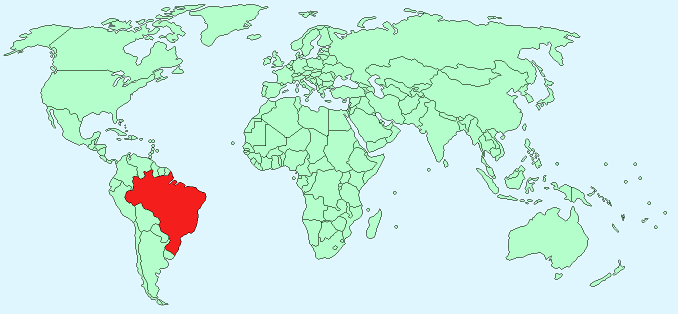
Dilma Rousseff
  • Brazil
  • President
    • Served three years in prison
    • Was repeatedly tortured
    • Divorced twice
    • Degree in economics
    • Underwent chemotherapy while being re-elected


Xi Jinping
  • China
  • President
    • A son of revolutionary veteran Xi Zhongxun
    • Married a folk singer/army general
    • Father was jailed
    • Their daughter studies at Harvard  
    • Communist 


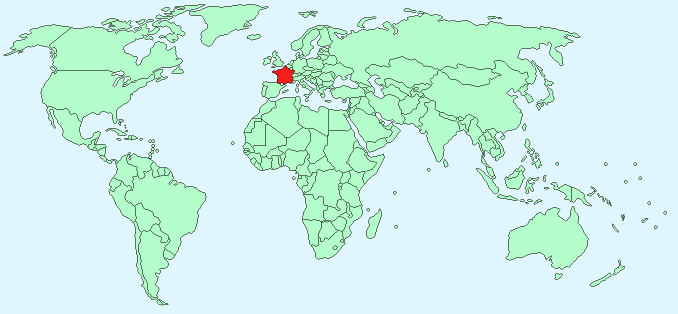
Francois Holland
  • France
  • President
    • No previous experience in national government position
    • Had a 30 year relationship and four children
    • Got divorced because he had an affair
    • Extreme right physician father
    • Social worker mother


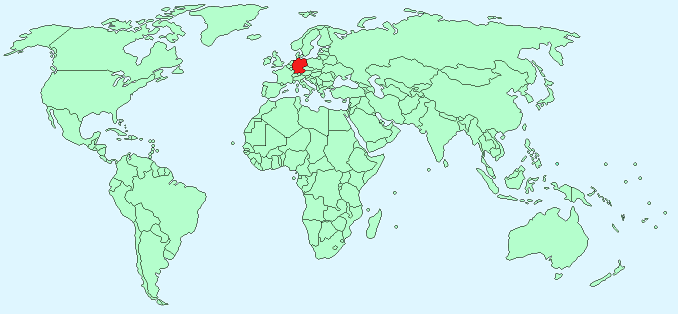
Joachim Gauk
  • President
  • Germany
Angela Merkel
  • Chancellor
  • Germany
    • Been chancellor since 2005
    • Top spot on FORBES list of most powerful women in the world for 8 of the past 10 years
    • Degree in physics and physical chemistry
    • Ph.D. in quantum physics


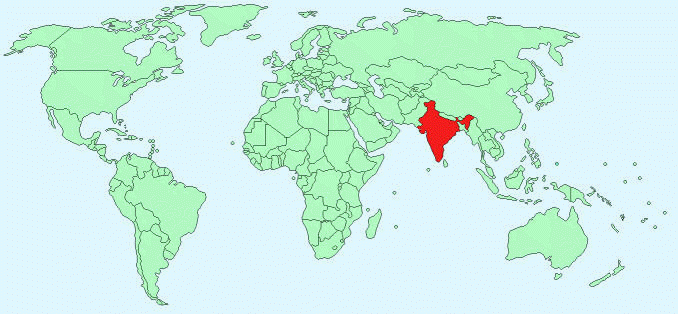
Pranab Mukherjee
  • India
  • President
    • Taught Political Science
    • Worked as a journalist
    • One of the best financial ministers
    • Had a conflict with Rajiv Gandhi who took over as Prime Minister
    • Started his own Congress/party


Ali Hoseini-Khamenei
  • Iran
  • Supreme Leader
    • Took part in street protest against the U.S.
    •  imprisoned multiple times
    • Elected president twice
    • Became Supreme Leader 1989
    • Been in charge for 24 years
Hasan Fedeidun Ruhani
  • President
  • Iran
    • Served on the Supreme National Security Council
    • Doesn’t go along with the president before him
    • Doesn’t want to drop a bomb on Israel


Shimon Peres
  • Israel
  • President  
    • His family fled to Palestine in 1934
    • Organized Israel's nuclear program
    • Father of Israel's atomic bomb
    • Won the Nobel peace prize
Binyamin Netanyahu
  • Prime minister
  • Israel
    • Nick name Bee-bee
    • Lived in the US at a young age
    • Brother was killed in 1976
    • Believes that if Israel was established earlier the Holocaust would not have happened


Enrique Pena Pieto
  • President
  • Mexico
    • Eldest of four siblings
    • Father was an engineer
    • Mother was a school teacher
    • Teflon candidate because nothing sticks to him
    • Had two affairs
    • Three kids with two on the side
    • Wife had a seizure
    • Married again to soap opera actor Angelic Rivera
    • Wants to clean up Mexico


Abdallah bin Abd al-Aziz Al Saud
  • Prime minister
  • Saudi Arabia
    • 22 children
    • Many different wives
    • Worth 21 billion dollars
    • Commander of the Saudi Arabian National Guard
    • First Saudi monarch to meet the Pope
    • In 2011 he granted women to vote and run in future elections
    • Has four wives currently


David Cameron
  • Prime minister of the UK
    • At 7 was shipped off to a highly exclusive preparatory school
    • Has a disabled son who died February 2009
    • Rides a bike to work everyday
    • Had his bike stolen a few times
    • Youngest prime minister in over 200 years
    • Went into office at 43
Queen Elizabeth II
  • Queen of England
    • 60 years in reign
    • Her son prince Charles


Nicolas Maduro Moros
  • Venezuela
  • President
    • Worked as a bus driver before becoming politically active
    • Was selected to be president
            

Tuesday, November 12, 2013

Revised 2


Hamid Karzai
  • Afghanistan
  • President
    • Against the Taliban
    • Knew what was going on with the Taliban
    • Worked against them
    • Warned the United States

Dilma Rousseff
  • Brazil
  • President
    • Served three years in prison
    • Was repeatedly tortured
    • Divorced twice
    • Degree in economics
    • Underwent chemotherapy while being re-elected

Xi Jinping
  • China
  • President
    • A son of revolutionary veteran Xi Zhongxun
    • Married a folk singer
    • Father was jailed
    • Their daughter studies at Harvard  

Francois Holland
  • France
  • President
    • No previous experience in national government position
    • Had a 30 year relationship and four children
    • Got divorced because he had an affair
    • Extreme right physician father
    • Public speaker mother

Joachim Gauk
  • President
  • Germany
Angela Merkel
  • Chancellor
  • Germany
    • Been chancellor since 2005
    • Top spot on FORBES list of most powerful women in the world for 8 of the past 10 years
    • Degree in physics and physical chemistry
    • Ph.D. in quantum physics

Pranab Mukherjee
  • India
  • President
    • Taught Political Science
    • Worked as a journalist
    • One of the best financial ministers
    • Had a conflict with Rajiv Gandhi who took over as Prime Minister
    • Started his own Congress/party

Ali Hoseini-Khamenei
  • Iran
  • Supreme Leader
    • Took part in street protest against the U.S.
    •  imprisoned multiple times
    • Elected president twice
    • Became Supreme Leader 1989
    • Been in charge for 24 years
Hasan Fedeidun Ruhani
  • President
  • Iran
    • Served on the Supreme National Security Council
    • Doesn’t go along with the president before him
    • Doesn’t want to drop a bomb on Israel

Shimon Peres
  • Israel
  • President  
    • His family fled to Palestine in 1934
    • Organized Israel's nuclear program
    • Father of Israel's atomic bomb
Binyamin Netanyahu
  • Prime minister
  • Israel
    • Nick name Bee-bee
    • Lived in the US at a young age
    • Brother was killed in 1976
    • Believes that if Israel was established earlier the Holocaust would not have happened

Enrique Pena Pieto
  • President
  • Mexico
    • Eldest of four siblings
    • Father was an engineer
    • Mother was a school teacher
    • Teflon candidate because nothing sticks to him
    • Had two affairs
    • Three kids with two on the side
    • Wife had a seizure
    • Married again to soap opera actor Angelic Rivera
    • Wants to clean up Mexico

Abdallah bin Abd al-Aziz Al Saud
  • Prime minister
  • Saudi Arabia
    • 22 children
    • Many different wives
    • Worth 21 billion dollars
    • Commander of the Saudi Arabian National Guard
    • First Saudi monarch to meet the Pope
    • In 2011 he granted women to vote and run in future elections